F and P Reading Level for Keena Ford
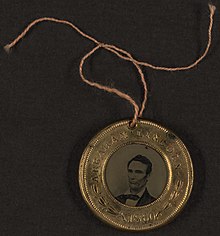
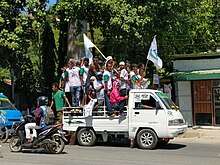
A political campaign is an organized endeavour which seeks to influence the decision making progress inside a specific group. In democracies, political campaigns often refer to electoral campaigns, by which representatives are called or referendums are decided. In modern politics, the well-nigh high-profile political campaigns are focused on general elections and candidates for head of state or head of government, often a president or prime number government minister.
Campaign message [edit]
The message of the campaign contains the ideas that the candidate wants to share with the voters. Information technology is to become those who agree with their ideas to support them when running for a political position. The bulletin often consists of several talking points near policy issues. The points summarize the chief ideas of the campaign and are repeated frequently in club to create a lasting impression with the voters. In many elections, the opposition party volition attempt to get the candidate "off bulletin" by bringing up policy or personal questions that are non related to the talking points. Virtually campaigns prefer to keep the bulletin broad in order to attract the most potential voters. A message that is as well narrow tin can alienate voters or deadening the candidate down with explaining details. For example, in the 2008 American presidential election John McCain originally used a message that focused on his patriotism and political experience: "Land Get-go"; later the bulletin was changed to shift attending to his function equally "The Original Bohemian" within the political institution. Barack Obama ran on a consistent, uncomplicated message of "change" throughout his campaign.
Campaign finance [edit]
Fundraising techniques include having the candidate phone call or meet with large donors, sending direct mail pleas to small donors, and courting involvement groups who could end up spending millions on the race if it is significant to their interests.
Organization [edit]
In a modern political campaign, the campaign system (or "machine") will accept a coherent structure of personnel in the aforementioned way every bit any business of similar size.
Campaign manager [edit]
Political consultants [edit]
Political consultants advise campaigns on virtually all of their activities, from research to field strategy. Consultants acquit candidate research, voter research, and opposition research for their clients.
Activists [edit]
Activists are the "foot soldiers" loyal to the cause, the true believers who volition carry the run past volunteer activists. Such volunteers and interns may take office in activities such every bit canvassing door-to-door and making phone calls on behalf of the campaigns.
Techniques [edit]

A entrada team (which may be equally pocket-sized as one inspired individual, or a heavily resourced group of professionals) must consider how to communicate the message of the campaign, recruit volunteers, and heighten money. Campaign advert draws on techniques from commercial advertising and propaganda, also amusement and public relations, a mixture dubbed politainment. The avenues available to political campaigns when distributing their messages is limited past the law, available resources, and the imagination of the campaigns' participants. These techniques are often combined into a formal strategy known every bit the campaign plan. The plan takes account of a campaign's goal, message, target audience, and resource bachelor. The campaign will typically seek to identify supporters at the same fourth dimension as getting its bulletin across. The modern, open up campaign method was pioneered by Aaron Burr during the American presidential ballot of 1800.[ane] [2] [iii]
Some other modern campaign method by political scientist Joel Bradshaw points out four key propositions for developing a successful campaign strategy. "Start, in any election the electorate can exist divided into three groups: the candidate'due south base, the opponent's base, and the undecided. 2nd, past election results, data from registered voter lists, and survey inquiry arrive possible to determine which people fall into each of these three groups. Tertiary, it is neither possible nor necessary to get the support of all people. Fourth, and last, one time a campaign has identified how to win, it can act to create the circumstances to bring about this victory. In order to succeed, campaigns should direct campaign resources— money, time, and message— to cardinal groups of potential voters and nowhere else."[4]
Campaign advice [edit]
Election campaign communication refers to party-controlled communication, east.thousand. entrada advertising, and party-uncontrolled communication, e.m. media coverage of elections.
Entrada advert [edit]
Campaign advertizement is the use of paid media (newspapers, radio, television, etc.) to influence the decisions made for and past groups. These ads are designed by political consultants and the campaign'due south staff.
Media management [edit]
Media management refers to the ability of a political campaign to control the message that information technology broadcasts to the public. The forms of media used in political campaigns can be classified into two singled-out categories: "paid media" or "earned media".[5]
Paid media refers to whatever media attention that is directly generated from spending.[half dozen] This form of media is commonly found through political advertisements and organized events. An reward of paid media is that it allows political campaigns to tailor the messages they prove the public and command when the public sees them. Campaigns often prioritize spending in contested regions and increment their paid media expenses as an election approaches.[vii] Electoral campaigns often conclude with a "closing argument ad", an advertising that summarizes the campaign's core themes and explains the candidate's vision for the future.[8] In the 2020 ballot, Joe Biden'due south "Rising" ad starts with him saying "we're in a boxing for the soul of this nation" and a worker in Donald Trump's Pennsylvania advertisement stated "that will be the end of my chore and thousands of others" if Trump lost.[9]
Earned media describes free media coverage, often from news stories or social media posts.[10] Unlike paid media, earned media does not incur an expense to the entrada. Earned media does not imply that the political entrada is mentioned in a positive manner. Political campaigns may frequently receive earned media from gaffes or scandals. In the 2016 United States Presidential Election, a majority of the media coverage surrounding Hillary Clinton was focused on her scandals, with the most prevalent topics existence topics related to her emails.[11]
Experts say that effective media direction is an essential component of a successful political campaign. Studies show that candidates with higher media attention tend to take greater success in elections.[12] It is too important to notation that each grade of media tin influence the other. Paid media may raise the newsworthiness of an result which could pb to an increase in earned media.[thirteen] Campaigns may too spend money to emphasize stories circulating through media networks. Research suggests that neither form of media is inherently superior. A 2009 study found that media coverage was not significantly more effective than paid advertisements.[14]
Demonstrations [edit]

Mod technology and the internet [edit]
The cyberspace is now a core element of modernistic political campaigns. Communication technologies such as e-mail, websites, and podcasts for various forms of activism enable faster communications by citizen movements and deliver a bulletin to a big audience. These Cyberspace technologies are used for cause-related fundraising, lobbying, volunteering, community building, and organizing. Private political candidates are also using the internet to promote their election entrada. In a study of Norwegian election campaigns, politicians reported they used social media for marketing and for dialogue with voters. Facebook was the primary platform for marketing and Twitter was used for more continuous dialogue.[xv]
Signifying the importance of internet political candidature, Barack Obama'due south presidential campaign relied heavily on social media, Search Engine Optimisation (SEO) and new media channels to engage voters, recruit campaign volunteers, and raise campaign funds. The campaign brought the spotlight on the importance of using internet in new-age political candidature by utilizing various forms of social media and new media (including Facebook, YouTube and a custom generated social engine) to reach new target populations. The campaign'south social website, my.BarackObama.com, utilized a low cost and efficient method of mobilizing voters and increasing participation amid various voter populations.[16] This new media was incredibly successful at reaching the younger population while helping all populations organize and promote action.
At present Online Election campaign has got a new dimension, the campaign information can be shared as in Rich Info format through campaign landing pages, integrating Google's rich snippets, structured information,[17] Social media open graphs, and husting support file formats for YouTube like .sbv (SubRip), .srt (subtitle resource track), .vtt (Video text trace), high proficiency and effective algorithmic integration will exist the core factor in the frame-piece of work. This technology integration helps entrada information to accomplish a wide audition in divide seconds. This has successfully been tested and implemented in 2015 Aruvikkara Election, 2020 Kerala Panchayat Election. Marcus Giavanni, social media consultant and blockchain developer and 2nd place opponent in the 2015 election, was first to file for the 2019 ballot.[18] Marcus Giavanni Uses Avant-garde Algorithms, Bogus Intelligence, and Vox Indexing Predictions to box in campaigns.[nineteen]
Husting [edit]
A husting, or the hustings, was originally a physical platform from which representatives presented their views or cast votes before a parliamentary or other election trunk. By metonymy, the term may at present refer to whatsoever upshot, such every bit debates or speeches, during an election campaign where one or more of the representative candidates are present.
Other techniques [edit]

- Writing straight to members of the public (either via a professional marketing firm or, specially on a pocket-size scale, past volunteers)
- By distributing leaflets or selling newspapers
- Through websites, online communities, and solicited or unsolicited bulk email[20]
- Through a new technique known equally microtargeting that helps identify and target small demographic slices of voters
- Through a whistlestop tour - a series of brief appearances in several small towns
- Hampering the ability of political competitors to campaign, past such techniques as counter-rallies, picketing of rival parties' meetings, or overwhelming rival candidates' offices with mischievous telephone calls (well-nigh political parties in representative democracies publicly distance themselves from such disruptive and morale-affecting tactics, with the exception of those parties self-identifying as activist
- Organizing political house parties
- Using endorsements of other celebrated party members to heave support (see coattail effect)
- Using a campaign surrogate - a celebrity or person of influence, campaigning on a candidate'due south behalf.
- Remaining close to or at habitation to brand speeches to supporters who come to visit as office of a forepart porch entrada
- Vote-past-mail, previously known as "absentee ballots" have grown significantly in importance equally an ballot tool. Campaigns in most states must have a strategy in place to impact early on voting[21]
- Auction of official campaign merchandise (colloquially known every bit swag, in reference to the baiting technique) as a way of commuting a competitor's popularity into campaign donations, volunteer recruitment, and free ad[22]
Campaign types [edit]
Informational entrada [edit]
An informational campaign is a political campaign designed to raise public awareness and back up for the positions of a candidate (or her/his political party).[23] It is more than intense than a paper campaign, which consists of piffling more filing the necessary papers to get on the ballot, just is less intense than a competitive entrada, which aims to really win election to the office. An informational campaign typically focuses on low-toll outreach such as news releases, getting interviewed in the paper, making a brochure for door to door distribution, organizing poll workers, etc.[24]
Newspaper campaign [edit]
A paper campaign is a political campaign in which the candidate only files the necessary paperwork to appear on the ballot.[25] [26] The purpose of such a token attempt may exist simply to increase name awareness of a minor political political party, to give voters of a certain ideology an opportunity to vote accordingly, or to ensure that the party has candidates in every constituency. It tin be a cost-constructive means of attracting media coverage. An informational campaign, by dissimilarity, may involve news releases, newspaper interviews, door-to-door campaigning, and organizing polls. Equally the level of seriousness rises, the marginal cost of reaching more than people rises accordingly, due to the high cost of TV commercials, paid staff, etc. which are used by competitive campaigns.[27] Newspaper candidates do not look to be elected and usually run but as a way of helping the more general campaign. However, an unexpected surge in support for the party may result in many paper candidates being unexpectedly elected, as for example happened to the New Autonomous Party in Quebec during the 2011 federal election.
Effects [edit]
A forthcoming study in the American Political Science Review found that campaigns have "an average effect of zero in general elections".[28] [29] The study establish two instances where campaigning was constructive: "First, when candidates accept unusually unpopular positions and campaigns invest unusually heavily in identifying persuadable voters. 2nd, when campaigns contact voters long before election day and measure out effects immediately — although this early persuasion decays."[28] [29]
Ane reason why it is difficult to estimate the effectiveness of an election campaign is because many people know who they want to vote for long before the campaigns are started. Voters are more likely to vote for a nominee based on whose values marshal closest with theirs. Studies advise that party flips come from the analysis of how a voter sees their parties performance in the years before a entrada fifty-fifty begins.[30]
Another study suggests that at the 2017 Austrian legislative election, 31% of voters admitted to either developing of changing their party preferences during the election campaign. The study provides data that shows how the main parties within Austria had differing levels of voters flipping toward them, thus proving that an election campaign has some level of effectiveness that differs between parties, depending on factors such as media presence.[31]
Presidential campaigns [edit]
A large body of political science inquiry emphasizes how "fundamentals" – the state of the economy, whether the country is at war, how long the president's party has held the office, and which candidate is more ideologically moderate – predict presidential ballot outcomes.[32] [33] [34] [35] [36] Nevertheless, campaigns may be necessary to enlighten otherwise uninformed voters about the fundamentals, which thus go increasingly predictive of preferences as the campaign progresses.[32] [37] [38] [39] Research suggests that "the 2012 presidential campaigns increased turnout in highly targeted states past 7–viii percentage points, on average, indicating that mod campaigns can significantly modify the size and limerick of the voting population".[40]
National conventions [edit]
A consensus in the political scientific discipline literature holds that national conventions unremarkably have a measurable effect on presidential elections that is relatively resistant to decay.[37] [38] [39]
Presidential and vice-presidential debates [edit]
Research is mixed on the precise impact of debates.[37] [39] [41] Rather than encourage viewers to update their political views in accordance with the nigh persuasive arguments, viewers instead update their views to only reflect what their favored candidate is saying.[42]
Presidential primaries [edit]
The fundamentals thing less in the outcome of presidential primaries. 1 prominent theory holds that the event of presidential primaries is largely determined by the preferences of party elites.[43] Presidential primaries are therefore less predictive, as various types of events may impact elites' perception of the viability of candidates. Gaffes, debates and media narratives play a greater role in primaries than in presidential elections.[33] [44]
Strategies [edit]
Traditional ground campaigning and voter contacts remain the nigh effective strategies.[forty] [45] Some inquiry suggests that knocking on doors tin can increase turnout by every bit much as 10%[46] and phone calls by as much equally four%.[47] I study suggests that backyard signs increment vote share by one.7 percentage points.[48] A review of more than 200 get-out-the-vote experiments finds that the most constructive tactics are personal: Door-to-door canvassing increases turnout by an boilerplate of about 2.5 percentage points; volunteer phone calls enhance it past about 1.9 points, compared to ane.0 points for calls from commercial phone banks; automated phone messages are ineffective.[49] [50] Each field function that the Obama campaign opened in 2012 gave him approximately a 0.3% greater vote share.[51] The Obama 2008 campaign's use of field nearly offices has been credited equally crucial in winning Indiana and N Carolina.[52] According to i study, the cost per vote past having a field office is $49.40.[52] Using out-of-state volunteers for canvassing is less constructive in increasing turnout than using local and trained volunteers.[53] [54]
Political science research generally finds negative advertising (which has increased over fourth dimension)[55] to be ineffective both at reducing the support and turnout for the opponent.[56] A 2021 study in the American Political Scientific discipline Review found that tv set campaign ads do affect election outcomes, in particular in down-election races.[57] Co-ordinate to political scientists Stephen Ansolabehere and Shanto Iyengar, negative ads practise succeed at driving down overall turnout though.[58] A 2019 written report of online political advert conducted by a party in the 2016 Berlin state election campaign found that the online-ad entrada "increased the political party's vote share by 0.7 percentage points" and that factual ads were more effective than emotional ads.[59]
According to political scientists Donald Light-green and Alan Gerber, it costs $31 to produce a vote going door to door, $91-$137 to produce a vote by sending out straight mailers, $47 per vote from leafletting, $58-$125 per vote from commercial phone banking, and $20-$35 per vote from voluntary phone cyberbanking.[lx] A 2018 report in the American Economical Review found that door-to-door canvassing on behalf of the Francois Hollande campaign in the 2012 French presidential election "did not affect turnout, but increased Hollande's vote share in the first round and accounted for ane fourth of his victory margin in the 2d. Visits' impact persisted in later elections, suggesting a lasting persuasion issue."[61] According to a 2018 study, repeated become-out-the-vote phone calls had diminishing furnishings only each boosted telephone call increased the probability to vote by 0.6-1.0 percentage points.[62] Some other 2018 study found that "party leaflets heave turnout by iv.iii percentage points while canvassing has a pocket-size additional issue (0.6 pct points)" in a United kingdom of great britain and northern ireland ballot.[63]
A 2016 study establish that visits past candidate visits to states take modest effects: "visits are near effective in influencing press coverage at the national level and within battleground states. Visits' furnishings on voters themselves, however, are much more modest than consultants ofttimes merits, and visits announced to have no effects exterior the market that hosts a visit."[64] The authors of the study fence that information technology would be more effective for campaigns to become to the pockets of the country where wealthy donors are (for fundraising) and concord rallies in the populous states both to attract national press and enhance funds.[64] A 2005 written report found that entrada visits had no statistically significant effect, after controlling for other factors, on voter turnout in the 1992, 1996, and 2000 elections.[65] On the other paw, a 2017 newspaper of the 1948 presidential election provides "strong testify that candidate visits can influence balloter returns".[66] Other research besides provides evidence that campaign visits increase vote share.[67]
According to a 2020 report, entrada spending on messaging to voters affects voter support for candidates.[68] Another 2020 report found that political advertising had small furnishings regardless of context, bulletin, sender, and receiver.[69]
History [edit]
Political campaigns have existed as long as at that place have been informed citizens to campaign amongst. Democratic societies have regular election campaigns, but political campaigning can occur on detail problems fifty-fifty in non-democracies so long as freedom of expression is allowed. Often mass campaigns are started by the less privileged or anti-establishment viewpoints (every bit against more powerful interests whose first resort is lobbying). The phenomenon of political campaigns are tightly tied to lobby groups and political parties.
The first modern campaign is often described every bit William Ewart Gladstone's Midlothian campaign in 1878–80, although there may be earlier recognizably modernistic examples from the 19th century. The 1896 William McKinley presidential campaign laid the groundwork for modernistic campaigns.[70] [71]
In the 1790-1820s, the Federalist Party and the Democratic-Republican Party battled it out in the so-called "First Party System". American election campaigns in the 19th century created the first mass-base political parties and invented many of the techniques of mass campaigning.[ commendation needed ]
History of election campaigns in America [edit]
Political campaigns are forever irresolute and evolving with the growth of technology. In the nineteenth-century candidates were non traveling the country in search of votes. That is until the American presidential race of 1896 when William McKinley recruited the help of Marcus A. Hanna. Hanna devised a programme to have voters come to McKinley. McKinley won the race with 51% of the votes.[72]
The development of new technologies has completely inverse the mode political campaigns are run. In the belatedly twentieth-century campaigns shifted into boob tube and radio broadcasts. The early 00s brought interactive websites. By 2008 the world of campaigns was available to millions of people through the net and social media programs. 2008 marks a new era of digital elections because of the fast-paced movement of information.[73]
Come across too [edit]
- Techniques and traditions
- Canvassing
- Election litter
- Ballot hope
- Husting
- Lawn sign
- Sign state of war
- Microtargeting
- Permanent campaign
- Political campaign staff
- Research strategies of election campaign communication research
- Robocalls & Personalized audio messaging
- Votebank
- Assumed Incumbency
- General topics
- Activism
- Civics
- Lobbying
- Media manipulation
- Minimal effects hypothesis
- Portal:Politics
References [edit]
- ^ "The Election of 1800". Lehrman Plant.
- ^ Unger, Harlow Giles (2014). John Marshall: the Chief Justice Who Saved the Nation. Hachette Books. ISBN978-0306822216.
- ^ Wheelan, Joseph (2006). Jefferson's Vendetta: the Pursuit of Aaron Burr and the Judiciary. PublicAffairs. ISBN0786716894.
- ^ Sides, John (2018). Campaigns and elections : rules, reality, strategy, choice. Shaw, Daron R., 1966-, Grossmann, Matthew,, Lipsitz, Keena (Third ed.). New York. ISBN978-0-393-64053-3. OCLC 1027769548.
- ^ Wynne, Robert. "The Real Difference Between PR And Advertizement". Forbes . Retrieved 2021-09-27 .
- ^ "Definition of Paid Media - Gartner Marketing Glossary". Gartner . Retrieved 2021-09-27 .
- ^ Adgate, Brad. "The 2020 Elections Will Prepare (Some other) Advertising Spending Tape". Forbes . Retrieved 2021-x-04 .
- ^ "Closing argument (political campaigns)". Ballotpedia . Retrieved 2021-ten-04 .
- ^ Gringlas, Sam (2020-10-27). "Biden And Trump Campaigns Stress Endmost Themes In New Television Ads". NPR . Retrieved 2021-10-04 .
- ^ Don, Stacks. A Professional person and Practitioner's Guide to Public Relations Inquiry, Measurement, and Evaluation.
- ^ "Partisanship, Propaganda, and Disinformation: Online Media and the 2016 U.S. Presidential Election | Berkman Klein Middle". cyber.harvard.edu. 2019-12-17. Retrieved 2021-09-27 .
- ^ van Erkel, Patrick F. A.; Van Aelst, Peter; Thijssen, Peter (2020-04-01). "Does media attention lead to personal electoral success? Differences in long and brusk campaign media effects for peak and ordinary political candidates". Acta Politica. 55 (2): 156–174. doi:10.1057/s41269-018-0109-10. ISSN 1741-1416.
- ^ Rinallo, Diego; Basuroy, Suman (2009). "Does Advertising Spending Influence Media Coverage of the Advertiser?". Journal of Marketing. 73 (6): 33–46. ISSN 0022-2429.
- ^ Don, Stacks (June 2009). "Exploring the Comparative Communications Effectiveness of Advertising and Public Relations: A Replication and Extension of Prior Experiments".
{{cite spider web}}: CS1 maint: url-status (link) - ^ Enli, Sara Gunn; Skogerbø, Eli (2013). "Personalized campaigns in party-centred politics". Information, Communication & Order. xvi (5): 757. doi:x.1080/1369118x.2013.782330. S2CID 143140185.
- ^ Lyons, Daniel (2008-11-22). "President 2.0". Newsweek . Retrieved 2010-05-eleven .
Obama harnessed the grass-roots power of the Web to get elected. How will he employ that ability now?
- ^ "Introduction to Structured Data - Search".
- ^ ഡെസ്ക്, വെബ് (2020-11-18). "ആരും വോട്ടുചെയ്തുപോകും; ഡിജിറ്റൽ പ്ലാറ്റ്ഫോമുകളിൽ പ്രചാരണം കളർഫുൾ | Madhyamam". world wide web.madhyamam.com . Retrieved 2021-02-23 .
- ^ "Several candidates have filed to run for Denver mayor in 2019. Here's what they say". Denver Post. May 29, 2018. Retrieved Oct 2, 2018.
- ^ "Campaign TV". Archived from the original on 2017-02-02. Retrieved 2020-05-08 .
- ^ Myers, Elise (2020-09-11). "What is one effective strategy used by political campaigns?". Campaigning Info . Retrieved 2021-04-12 .
- ^ Diane Tucker, Dawn Teo (3 November 2008). "Off The Bus: Obama Campaign Rewrites Fundraising Rules past Selling Merchandise". Huffington Post . Retrieved xx May 2009.
- ^ "Publications - Social Research - Swinburne University - Melbourne" (PDF).
- ^ "Changing Focus/Priorities". Lppa.org. Archived from the original on July 25, 2008. Retrieved 2008-eleven-08 .
- ^ "ten Questions With Libertarian Party of Nevada Chairman Jim Duensing, Pt. 2".
- ^ "Media" (PDF). Archived from the original (PDF) on 2017-10-19. Retrieved 2015-04-02 .
- ^ Changing Focus/Priorities Archived July 25, 2008, at the Wayback Motorcar
- ^ a b Kalla, Joshua; Broockman, David E. (2017-09-25). "The Minimal Persuasive Effects of Entrada Contact in General Elections: Evidence from 49 Field Experiments". American Political Science Review. Rochester, NY. SSRN 3042867.
- ^ a b "A massive new written report reviews the evidence on whether campaigning works. The respond'due south bleak". Vox . Retrieved 2017-x-04 .
- ^ Campbell, James Eastward. (2008-01-fourteen). The American Campaign, Second Edition: U.Due south. Presidential Campaigns and the National Vote. Texas A&K Academy Press. ISBN978-1-58544-628-5.
- ^ Johann, David; Königslöw, Katharina Kleinen-von; Kritzinger, Sylvia; Thomas, Kathrin (2018-04-03). "Intra-Campaign Changes in Voting Preferences: The Touch of Media and Political party Advice". Political Communication. 35 (two): 261–286. doi:x.1080/10584609.2017.1339222. ISSN 1058-4609. PMC5894360. PMID 29695892.
- ^ a b Gelman, Andrew; King, Gary (2008-01-17). "Why are American Presidential Ballot Campaign Polls and so Variable When Votes are and then Predictable?". British Journal of Political Science. Rochester, NY: Social Science Research Network. SSRN 1084120.
- ^ a b Noel, Hans (2010). "Ten Things Political Scientists Know that You Don't". The Forum. eight (3). doi:ten.2202/1540-8884.1393. S2CID 145700304.
- ^ Bartels, Larry M.; Zaller, John (2001-03-01). "Presidential Vote Models: A Recount". PS: Political Science & Politics. 34 (1): 9–20. CiteSeerXx.ane.1.471.3300. doi:ten.1017/S1049096501000026. ISSN 1537-5935. S2CID 154297918.
- ^ Jr, Douglas A. Hibbs (2000-07-01). "Bread and Peace Voting in U.S. Presidential Elections". Public Choice. 104 (one–two): 149–180. doi:10.1023/A:1005292312412. ISSN 0048-5829. S2CID 11065014.
- ^ Vavreck, Lynn (26 July 2009). Vavreck, L.: The Message Matters: The Economy and Presidential Campaigns. (eBook and Paperback). printing.princeton.edu. ISBN9780691139630 . Retrieved 2016-04-23 .
- ^ a b c The Timeline of Presidential Elections. University of Chicago Press . Retrieved 2016-04-23 .
- ^ a b The Obama Victory. global.oup.com. Oxford University Press. 26 August 2010. ISBN978-0-nineteen-539955-4 . Retrieved 2016-04-23 .
- ^ a b c Sides, John; Vavreck, Lynn (vii September 2014). Sides, J. and Vavreck, L.: The Gamble: Option and Take a chance in the 2012 Presidential Ballot. (Updated Edition) (eBook and Paperback). printing.princeton.edu. ISBN9780691163635 . Retrieved 2016-04-23 .
- ^ a b Enos, Ryan D.; Fowler, Anthony (2016-05-01). "Aggregate Effects of Large-Calibration Campaigns on Voter Turnout". Political Science Research and Methods. FirstView (4): 733–751. doi:ten.1017/psrm.2016.21. ISSN 2049-8489. S2CID 155467129.
- ^ Shaw, Daron R. (1999-05-01). "A Report of Presidential Entrada Event Effects from 1952 to 1992". The Journal of Politics. 61 (2): 387–422. doi:ten.2307/2647509. ISSN 1468-2508. JSTOR 2647509. S2CID 154687906. [ permanent dead link ]
- ^ Abramowitz, Alan I. (1978-01-01). "The Touch on of a Presidential Contend on Voter Rationality". American Journal of Political Science. 22 (iii): 680–690. doi:10.2307/2110467. JSTOR 2110467.
- ^ The Political party Decides. University of Chicago Press . Retrieved 2016-04-23 .
- ^ "Why News Coverage of the Debate May Thing More than than the Contend - The Monkey Muzzle". The Monkey Cage. 2 October 2012. Retrieved 2016-04-23 .
- ^ Weinschenk, Aaron C. (2015-09-01). "Polls and Elections: Campaign Field Offices and Voter Mobilization in 2012". Presidential Studies Quarterly. 45 (3): 573–580. doi:10.1111/psq.12213. ISSN 1741-5705.
- ^ Gerber, Alan S.; Greenish, Donald P. (2000-01-01). "The Effects of Canvassing, Phone Calls, and Directly Mail on Voter Turnout: A Field Experiment". The American Political Science Review. 94 (three): 653–663. doi:x.2307/2585837. JSTOR 2585837. S2CID 59034723.
- ^ Nickerson, David West. (2007-04-01). "Quality Is Job One: Professional person and Volunteer Voter Mobilization Calls". American Periodical of Political Science. 51 (2): 269–282. doi:10.1111/j.1540-5907.2007.00250.x. ISSN 1540-5907.
- ^ Green, Donald P.; Krasno, Jonathan S.; Coppock, Alexander; Farrer, Benjamin D.; Lenoir, Brandon; Zingher, Joshua N. (2016-03-01). "The effects of lawn signs on vote outcomes: Results from iv randomized field experiments". Electoral Studies. 41: 143–150. doi:x.1016/j.electstud.2015.12.002.
- ^ Green, Donald P.; McGrath, Mary C.; Aronow, Peter Thou. (2013-02-01). "Field Experiments and the Study of Voter Turnout". Periodical of Elections, Public Opinion and Parties. 23 (1): 27–48. doi:10.1080/17457289.2012.728223. ISSN 1745-7289. S2CID 53376573.
- ^ Jacobson, Gary C. (2015-01-01). "How Do Campaigns Affair?". Annual Review of Political Science. xviii (1): 31–47. doi:10.1146/annurev-polisci-072012-113556.
- ^ Masket, Seth; Sides, John; Vavreck, Lynn (2015-07-27). "The Ground Game in the 2012 Presidential Election". Political Advice. 33 (2): 169–187. doi:10.1080/10584609.2015.1029657. ISSN 1058-4609. S2CID 146490882.
- ^ a b Darr, Joshua P.; Levendusky, Matthew S. (2014-05-01). "Relying on the Footing Game The Placement and Result of Campaign Field Offices". American Politics Research. 42 (3): 529–548. doi:10.1177/1532673X13500520. ISSN 1532-673X. S2CID 154664815.
- ^ Sinclair, Betsy; McConnell, Margaret; Michelson, Melissa R. (2013-01-01). "Local Canvassing: The Efficacy of Grassroots Voter Mobilization". Political Communication. 30 (one): 42–57. doi:x.1080/10584609.2012.737413. ISSN 1058-4609. S2CID 42874299.
- ^ Middleton, Joel A.; Green, Donald P. (March 2008). "Exercise customs-based voter mobilization campaigns work fifty-fifty in battleground states? Evaluating the effectiveness of MoveOn's 2004 outreach campaign". Quarterly Periodical of Political Scientific discipline. 3 (ane): 63–82. doi:x.1561/100.00007019. S2CID 52044755.
- ^ Dowling, Conor M.; Krupnikov, Yanna (2016-11-22). "The Furnishings of Negative Advertizing". Oxford Inquiry Encyclopedia of Politics. doi:ten.1093/acrefore/9780190228637.013.51. ISBN9780190228637.
- ^ Lau, Richard R.; Sigelman, Lee; Rovner, Ivy Chocolate-brown (2007-xi-01). "The Effects of Negative Political Campaigns: A Meta-Analytic Reassessment". Journal of Politics. 69 (4): 1176–1209. doi:10.1111/j.1468-2508.2007.00618.x. ISSN 1468-2508. S2CID 155001726.
- ^ Sides, John; Vavreck, Lynn; Warshaw, Christopher (2021). "The Effect of Television Advertizing in The states Elections". American Political Science Review. doi:10.1017/S000305542100112X. ISSN 0003-0554.
- ^ Ansolabehere, Stephen; Iyengar, Shanto (2016-06-20). Going Negative . The New York Times. Free Press. ISBN9780684837116. ISSN 0362-4331. Retrieved 2016-06-20 .
- ^ Hager, Anselm (2019). "Exercise Online Ads Influence Vote Choice?". Political Advice. 36 (3): 376–393. doi:ten.1080/10584609.2018.1548529. S2CID 149800615.
- ^ "Every vote matters. What's the best manner to get them?". Public Radio International . Retrieved 2016-06-10 .
- ^ Vincent, Pons (2018). "Will a 5-Minute Give-and-take Alter Your Mind? Countrywide Experiment on Voter Choice in French republic". American Economical Review. 108 (6): 1322–1363. doi:x.1257/aer.20160524. ISSN 0002-8282.
- ^ "Repeated treatment in a GOTV field experiment: Distinguishing betwixt intensive and extensive margin effects".
- ^ Townsley, Joshua (north.d.). "Is it worth door-knocking? Evidence from a Great britain-based Get Out The Vote (GOTV) field experiment on the outcome of party leaflets and canvass visits on voter turnout". Political Science Enquiry and Methods: 1–15. doi:10.1017/psrm.2018.39. ISSN 2049-8470.
- ^ a b Wood, Thomas (2016-09-01). "What The Heck Are Nosotros Doing in Ottumwa, Anyway? Presidential Candidate Visits and Their Political Consequence". The Annals of the American Academy of Political and Social Science. 667 (ane): 110–125. doi:x.1177/0002716216661488. ISSN 0002-7162. S2CID 151905273.
- ^ Holbrook, Thomas M.; McClurg, Scott D. (2005-10-01). "The Mobilization of Core Supporters: Campaigns, Turnout, and Electoral Composition in U.s. Presidential Elections". American Journal of Political Science. 49 (4): 689–703. doi:10.1111/j.1540-5907.2005.00149.x. ISSN 1540-5907.
- ^ Heersink, Boris; Peterson, Brenton D. (2017). "Truman defeats Dewey: The effect of campaign visits on election outcomes". Electoral Studies. 49: 49–64. doi:10.1016/j.electstud.2017.07.007.
- ^ Bednar, Steven (2017-07-28). "Campaigning and election outcomes in a presidential primary ballot". Practical Economics Letters. 25 (x): 713–717. doi:10.1080/13504851.2017.1360999. ISSN 1350-4851. S2CID 158086367.
- ^ Schuster, Steven Sprick (2020-02-25). "Does Campaign Spending Affect Ballot Outcomes? New Prove from Transaction-Level Disbursement Data". The Journal of Politics. 82 (iv): 1502–1515. doi:ten.1086/708646. ISSN 0022-3816. S2CID 214168948.
- ^ Coppock, Alexander; Loma, Seth J.; Vavreck, Lynn (2020-09-01). "The pocket-sized furnishings of political advertising are small regardless of context, bulletin, sender, or receiver: Bear witness from 59 real-time randomized experiments". Science Advances. 6 (36): eabc4046. Bibcode:2020SciA....6.4046.. doi:10.1126/sciadv.abc4046. ISSN 2375-2548. PMC7467695. PMID 32917601.
- ^ Wiesner-Hanks, Merry E.; Evans, Andrew D.; Wheeler, William Bruce; Ruff, Julius (2014). Discovering the Western Past, Volume Ii: Since 1500. Cengage Learning. p. 336. ISBN978-1111837174.
- ^ Price, Richard (1999). British Lodge 1680-1880: Dynamism, Containment and Change. Cambridge University Press. p. 289. ISBN9780521657013.
- ^ Burton, Michael; Miller, William J.; Shea, Daniel K. (2015-06-23). Campaign Craft: The Strategies, Tactics, and Art of Political Campaign Direction, fifth Edition: The Strategies, Tactics, and Fine art of Political Campaign Management. ABC-CLIO. ISBN978-i-4408-3733-three.
- ^ Owen, Diana (2017-08-24). Kenski, Kate; Jamieson, Kathleen Hall (eds.). "New Media and Political Campaigns". The Oxford Handbook of Political Communication. doi:10.1093/oxfordhb/9780199793471.001.0001. ISBN9780199793471 . Retrieved 2020-12-01 .
Sources [edit]
World [edit]
- Abizadeh, Arash (2005). "Democratic Elections without Campaigns? Normative Foundations of National Baha'i Elections". World Order. 37 (1): seven–49.
- Barnes, S. H., and M. Kaase Political Activity: Mass Participation in 5 Western Democracies. Sage, 1979.
- Blewett, Neal. The Peers, the Parties and the People: The General Elections of 1910. London: Macmillan, 1972.
- Hix, S. The Political System of the European Union. St. Martin's Press, 1999.
- Katz, Richard Due south., and Peter Mair (eds.), How Parties Organize: Change and Adaptation in Party Organizations in Western Democracies. Sage Publications, 1994.
- Katz, Richard S.; Mair, Peter (1995). "Irresolute Models of Party System and Political party Republic: The Emergence of the Dare Political party". Party Politics. 1: v–28. doi:10.1177/1354068895001001001. S2CID 143611762.
- LaPalombara, Joseph and Myron Wiener (eds.), Political Parties and Political Development. Princeton University Press, 1966.
- Panebianco, A. Political Parties: Organization and Power. Cambridge University Press, 1988.
- Paquette, Laure. Entrada Strategy. New York: Nova, 2006.
- Poguntke, Thomas, and Paul Webb, eds. The Presidentialization of Politics: A Comparative Written report of Modern Democracies. Oxford University Press. 2005 online
- Ware, Alan. Citizens, Parties and the State: A Reappraisal. Princeton University Press, 1987.
- Webb, Paul, David Farrell, and Ian Holliday, Political Parties in Advanced Industrial Democracies. Oxford University Printing, 2002
United States [edit]
- Bike, William S. Winning Political Campaigns: A Comprehensive Guide to Electoral Success. Chicago: Central Park Communications, 2012.
- Cunningham, Sean P. Cowboy Conservatism: Texas and the Ascent of the Modernistic Right. Lexington: University Press of Kentucky, 2010.
- Robert J. Dinkin. Campaigning in America: A History of Election Practice. Westport: Greenwood, 1989.
- John Gerring, Party Ideologies in America, 1828–1996. New York: Cambridge University Press, 1998.
- Lewis L. Gould, 1000 Sometime Party: A History of the Republicans. New York: Random House, 2003.
- Gary C. Jacobson. The Politics of Congressional Elections. (5th Edition) New York: Longman, 2000.
- Richard Jensen, The Winning of the Midwest: Social and Political Disharmonize, 1888–1896. Chicago: University of Chicago Press, 1971.
- L. Sandy Meisel, ed. Political Parties and Elections in the The states: An Encyclopedia. New York: Garland, 1991.
- Arthur Thou. Schlesinger Jr., ed. History of American Presidential Elections. 4 vols. New York: Chelsea House, 1971.
- James A. Thurber, Campaigns and Elections American Style. New York: Westview Printing; 2nd edition, 2004.
- Kirsten A. Foot and Steven M. Schneider, "Spider web Candidature". The MIT Press, 2006.
- Bruce A. Bimber and Richard Davis, Campaigning Online: the Net in U.Southward. Elections. Oxford University Press, 2003.
- Justin A. Gravely. " Campaigning on American soil and the rules of the American Government". Cambridge Academy Press, 2014
Further reading [edit]
- Gary C. Jacobson. 2015. How Exercise Campaigns Matter? The Annual Review of Political Science.
External links [edit]
humphreyshopplaunt72.blogspot.com
Source: https://en.wikipedia.org/wiki/Political_campaign

Post a Comment for "F and P Reading Level for Keena Ford"